
Silicone Rubber Recycling
Recycled Skin Process Flow
| 1. Different Colors of silicone rubber burr is set aside and used as recycled material. |
 |
|
2. Recycle silicone rubber is manually cut into small flakes Additional manpower required for Recycled Skin as compared with ordinary skin |
 
|
| 3. Disperse flakes of recycled silicone rubber evenly throughout a piece of raw silicone rubber. |
 |
| 4. Material mixing in progress |
 |
| 5. Material mixing completed |
 |
| 6. Cut mixed material into required size to fit into master tool |
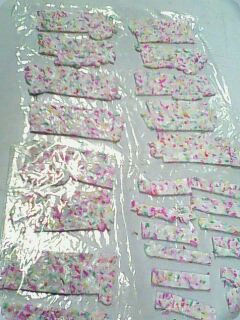 |
| 7. Place the mixed material into the master tool |
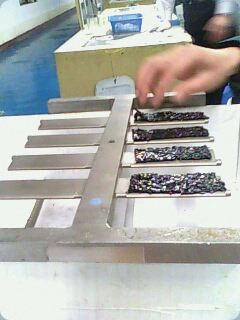 |
| 8. Compression molding completed |
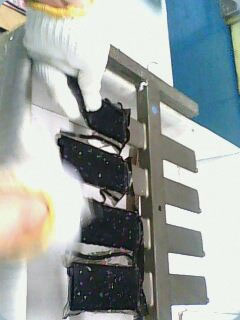 |
| 9. De-Molded after compression molding | 10. Intensive manual de-burring |
| Additional manpower and wastage as compared to ordinary skins | |
 |
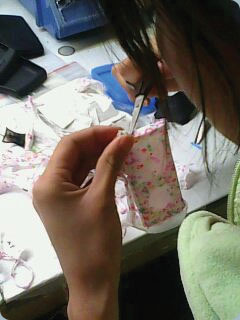 |
| 11. Different amount (%) of recycled silicone rubber flakes – unique pattern on each skin |
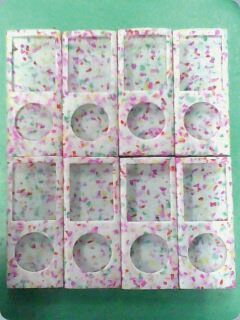 |
Different amount (%) of Recycled Silicone Rubber
| Material Thickness: 1.0mm | Material Thickness: 1.5mm | |
 |
 |
 |
| Composition: 25% recycled silicone 75% raw silicone Result: out of shape | Composition: 15% recycled silicone 85% raw silicone Result: In good shape | Composition: 25% recycled silicone 75% raw silicone Result: In good shape |
Important Notes
|
Recycled Skin – Tensile Strength Test
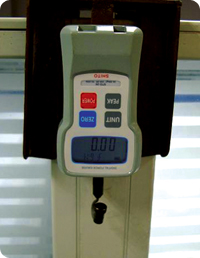
|
Test Procedure:
|
Recycled skin – Tensile Strength Test
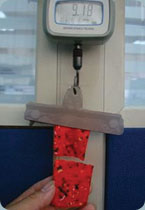
Photo images: Tensile Strength Tests in Progress
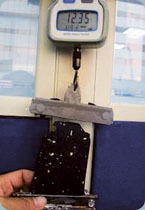
|
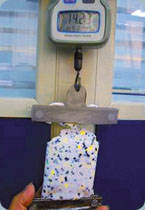
|
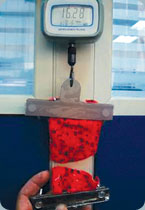
|
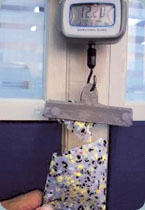
|
Recycled skin – Tensile Strength Test
Photo images: Tensile Strength Tests in Progress
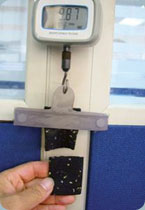
|
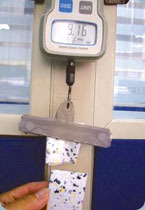
|
|

|
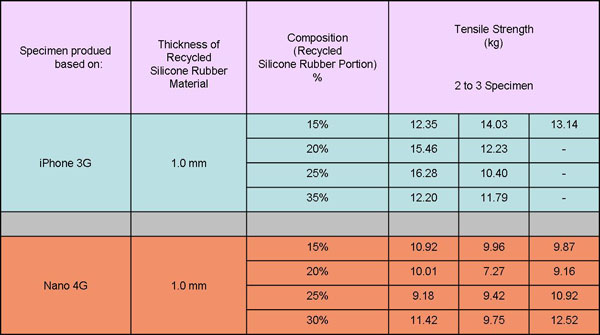
Recycled skin – Tensile Strength Test Report
Conclusion
Recycled skins exhibit a relatively weaker tensile strength. The higher percentage of recycled silicone rubber content, the more vulnerable it is to tear.
Production of Recycled Skins will cause:
- Higher wastage
- Higher production cost
